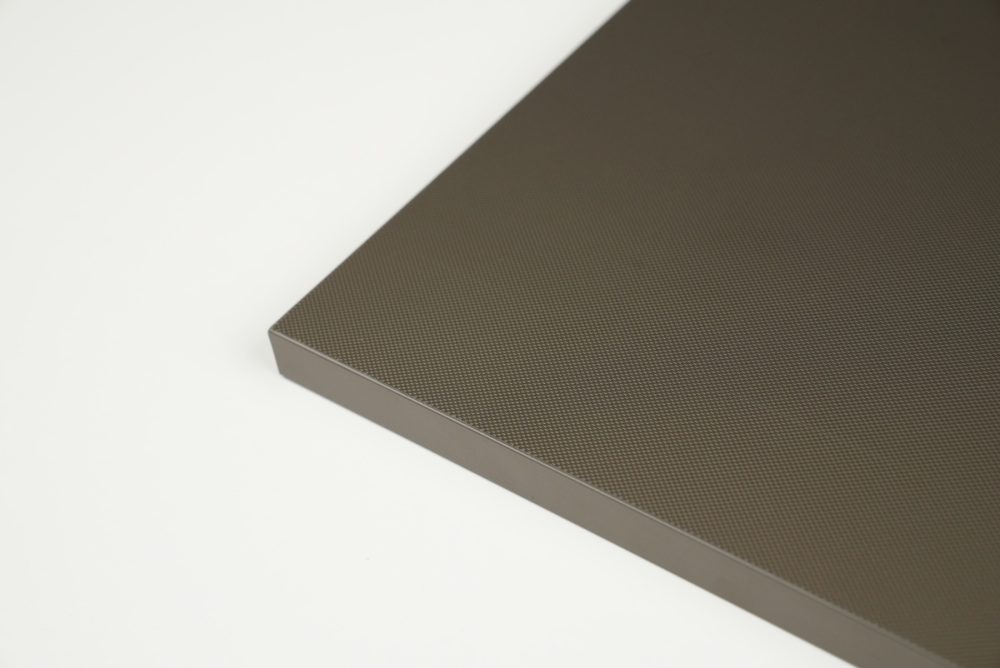
The quality of a piece of furniture starts with a well-prepared component
The finished piece of furniture is the result of many prior technological decisions. Before it reaches a showroom, online store, or end customer, its components are manufactured: fronts, blanks, panels, moldings, profiles, panels, and structural components. If they are made with precision, using the right technology and properly selected materials, the entire furniture production process becomes more predictable.
Pre-made furniture components can simplify production, speed up assembly, and reduce the risk of manufacturing errors. The delivered components are ready for immediate use, allowing the manufacturer to skip time-consuming steps such as cutting, edging, or routing. This is especially important for large or urgent orders, where repeatability, timeliness, and consistent quality are key. In this context, the durability of the furniture is no accident. It stems from a well-planned process: from the selection of MDF or particleboard, through the choice of film, the lamination method, and the quality of the adhesive, all the way to the precise edge finishing. Each of these stages influences the final result, and thus also determines whether the finished product will meet the expectations of both the manufacturer and the user.
PUR Adhesives – The Invisible Element That Ensures Durability
One of the most important factors influencing furniture quality is PUR adhesives, or reactive polyurethane adhesives. The lamination process using PUR adhesives involves bonding the surface of particleboard or MDF with PVC, PP, or PET polymer film, FINISH-type film, or another finishing material. This process allows for precise and even distribution of the adhesive across the entire surface of the component, resulting in a uniform surface and high quality consistency in mass production.
This is particularly important in the production of furniture intended for use in kitchens, bathrooms, and other rooms exposed to fluctuating humidity and elevated temperatures. PUR adhesives are highly resistant to moisture and elevated temperatures, and they create a durable and flexible bond. This reduces the risk of the coating peeling off during use. Aesthetics are also worth noting. A small amount of joint material combined with maximum bonding strength minimizes the visibility of the adhesive and allows for a smooth, uniform surface without excess bonding material. This is important because in furniture manufacturing, technical and aesthetic quality are very often closely linked. A well-executed joint not only improves durability but also enhances the appearance of the entire component.
HOT MELT LAMINATION – a technology for smooth and durable surfaces
One of Melaco’s key technologies is HOT MELT LAMINATION. This is a modern production process for furniture panels and strips, in which a film is applied to the panel using a reactive PUR adhesive. The even application of a controlled minimum adhesive weight and its immediate bonding with the polymer film results in a very high-quality surface finish. The adhesive bond obtained in this process has high resistance to moisture and elevated temperatures, which is why these components are used in the production of kitchen and bathroom furniture, as well as bedroom and living room furniture.
What matters here is not just the adhesive itself, but the entire controlled process. In this technology, polyurethane adhesive is applied to the board surface at a specific temperature, and the amount of adhesive applied, air humidity, and ambient temperature are monitored and recorded. This demonstrates that the durability of the bond results from the combination of material, technology, and control of production parameters.
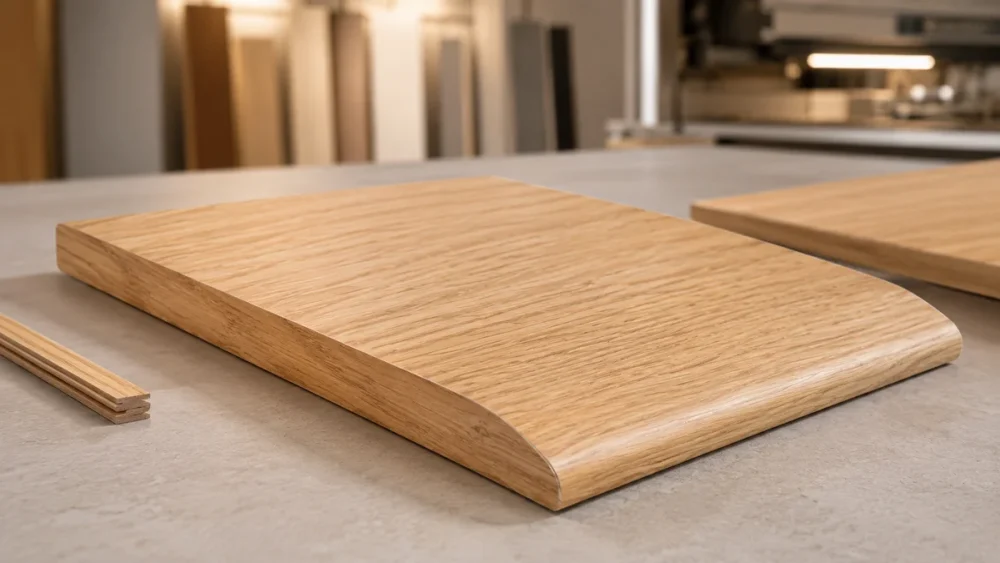
Fewer complaints thanks to durability, resistance, and process control
Fewer complaints do not result solely from a single factor, such as the adhesive alone. They are the result of a combination of materials, technology, process control, and precise workmanship. If the front or panel is resistant to moisture, elevated temperatures, and daily use, and the surface is permanently bonded to the substrate, the manufacturer reduces the risk of post-sale issues. Durable bonding and a good surface are not everything. Precision in machining is equally important. In production processes, the company utilizes, among other things, CNC machining, formatting, and milling in accordance with documentation. Such measures allow for the creation of components tailored to subsequent stages of furniture production. Such high precision has practical significance. Finished components can reduce the risk of manufacturing errors, minimize material waste, shorten production time, and allow manufacturers to operate more efficiently. From a furniture company’s perspective, this means not only better process organization but also greater predictability in the quality of finished collections.
Summary
Durable joints and properly selected adhesives have a direct impact on the quality of furniture. The combination of PUR technology, the HOT MELT LAMINATION process, precision CNC machining, and many other factors is of the utmost importance. PUR adhesives provide resistance to moisture and elevated temperatures, while the even application of adhesive in HOT MELT LAMINATION technology ensures a smooth, uniform, and durable surface. Precise machining and well-designed joints, in turn, facilitate assembly and ensure the repeatability of finished components. For furniture manufacturers, this means greater control over quality, a lower risk of manufacturing defects, and the ability to reduce post-sale issues. For end users—furniture that is aesthetically pleasing, comfortable to use, and better equipped to handle daily wear and tear. Check out HOT MELT LAMINATION
Contact
Do you have questions? Contact us.
We will be pleased to answer all questions about MELACO’s offer, terms of cooperation and orders. Write or call us.
Contact
Melaco sp. z o.o.
ul. Ciepielowska 9
67-100 Nowa Sól
Poland
SALES DEPARTMENT
Agata Sroczyńska
Sales Coordinator
SALES DEPARTMENT
Beata Prałat
Sales Specialist