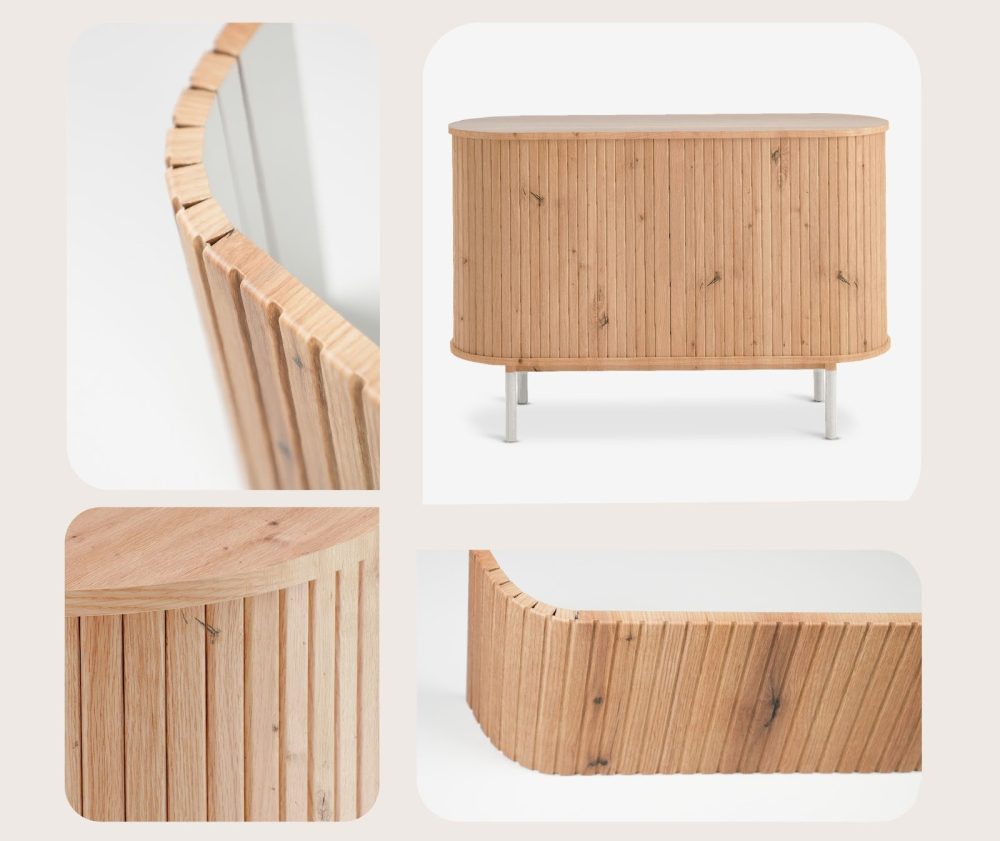
Key improvements to roll-up templates in the production process
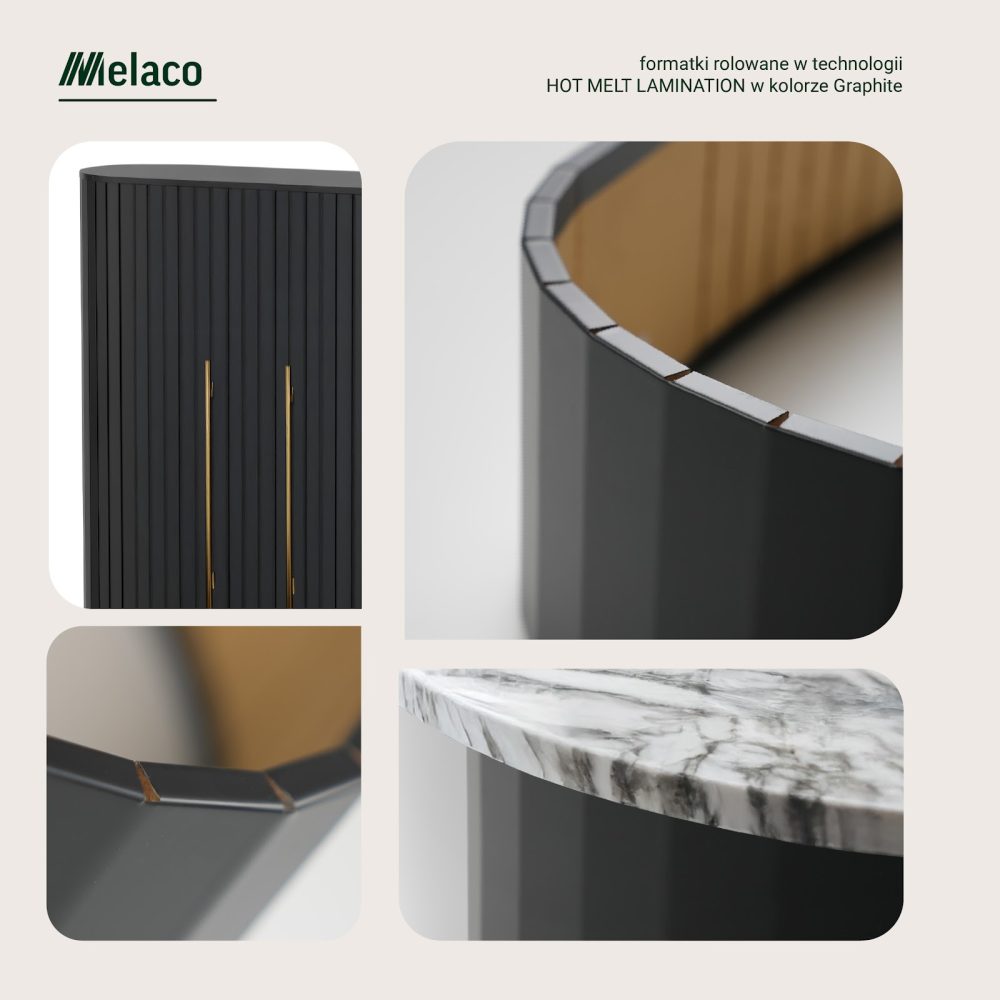
A key change was the introduction of an improved method of cutting rolled formats. It is in the bending zone that the material works hardest, and this is where there was previously a risk of microcracks in the decorative layer. The changes introduced have eliminated the risk of film cracking at the bend. In practice, this means greater durability of the element both during installation and during many years of furniture use.
At the same time, the problem of discoloration at the bend has been solved. In earlier versions of the products, changes in material tension could cause slight tonal differences. After the improvements, the color and structure remain uniform even in the bending zone, which translates into the high aesthetics of the entire element.
The elements we offer are an alternative to expensive corner strips, slats, or components made using bending technology, allowing for a simpler design and optimized production costs. We manufacture them according to the customer’s design, with the possibility of full processing, including drilling and full machining without standardization restrictions. We also ensure a precise match of color and pattern to the laminated board and other furniture elements, which guarantees the visual consistency of the finished product.
Technology section – how do rolled formats work?
Rolled form technology is based on controlled cutting and preparation of the material in such a way as to enable precise bending without damaging the decorative layer. The key factors here are the appropriate tolerance of the cutting depth and the geometry of the cuts, which allow the stresses generated during the forming of the element to be distributed. This process requires precise machining and consistent production parameters. Too shallow a cut could cause excessive stress, while too deep a cut could weaken the structure. That is why it is so important to optimize the geometry and adjust the machine settings to the specific type of material and decor.
In addition, profiling with a lamella effect is carried out at the surface treatment stage, maintaining an even distribution and constant depth of the structure. This allows for a visual rhythm characteristic of lamellas while maintaining the integrity of the entire component. The entire process requires precise synchronization of technological operations in order to maintain both the aesthetics and strength of the element.
Development that genuinely improves quality
Improvements to roll-up templates are not cosmetic changes, but specific improvements in technical and aesthetic parameters. The new cutting method eliminates the risk of cracking and discoloration, and the slatted effect expands design possibilities without increasing construction costs. This is an example of conscious product improvement in response to real market needs.
Summary
Improvements to roll-up templates in the production process are a solution that has been refined in terms of both technology and aesthetics. The new cutting method eliminates the risk of film cracking, the absence of discoloration ensures visual consistency, and profiling with a lamellar effect expands design possibilities. Combined with flexibility of execution and a perfect color match to the laminated board, this solution responds to current market needs and confirms that continuous improvement of the production process has a real impact on the quality of the finished product. Read also Carbon furniture board collection – winner of the 2026 Furniture Diamond Award
Contact
Do you have questions? Contact us.
We will be pleased to answer all questions about MELACO’s offer, terms of cooperation and orders. Write or call us.
Contact
Melaco sp. z o.o.
ul. Ciepielowska 9
67-100 Nowa Sól
Poland
SALES DEPARTMENT
Agata Sroczyńska
Sales Coordinator
SALES DEPARTMENT
Beata Prałat
Sales Specialist